Wedding Trends 2026 — What's in Style and What Actually Makes Sense
Quiet luxury, micro weddings, live food stations and AI in planning — a review of trends dominating the 2026 season and how to implement them without overspending.
The 2026 wedding season looks nothing like five years ago. Couples no longer chase "the biggest reception in the family" — they want a wedding that tells their story. On TikTok and Pinterest the same motifs return: intimacy, natural colours, attractions that genuinely engage guests, and tools that save planning time.
Quiet luxury and garden chic — aesthetics without excess
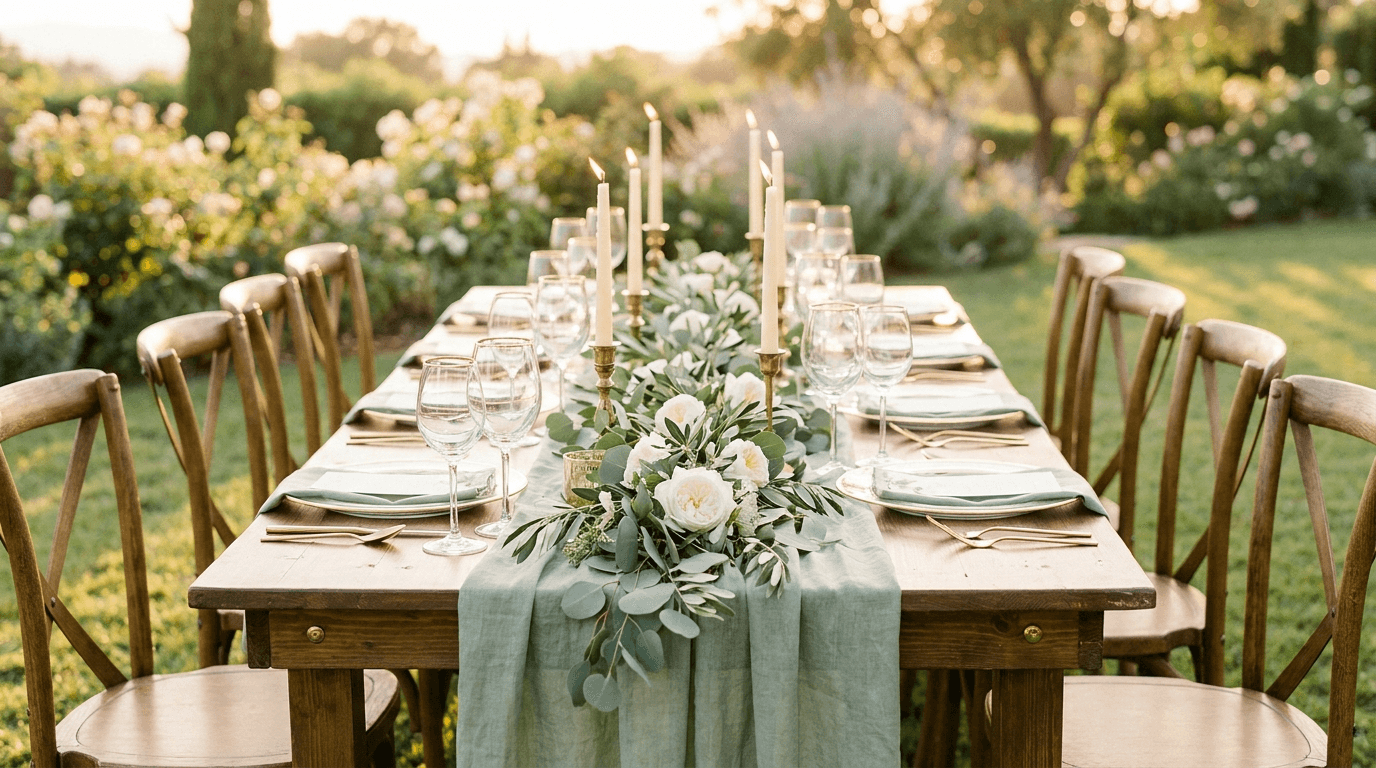
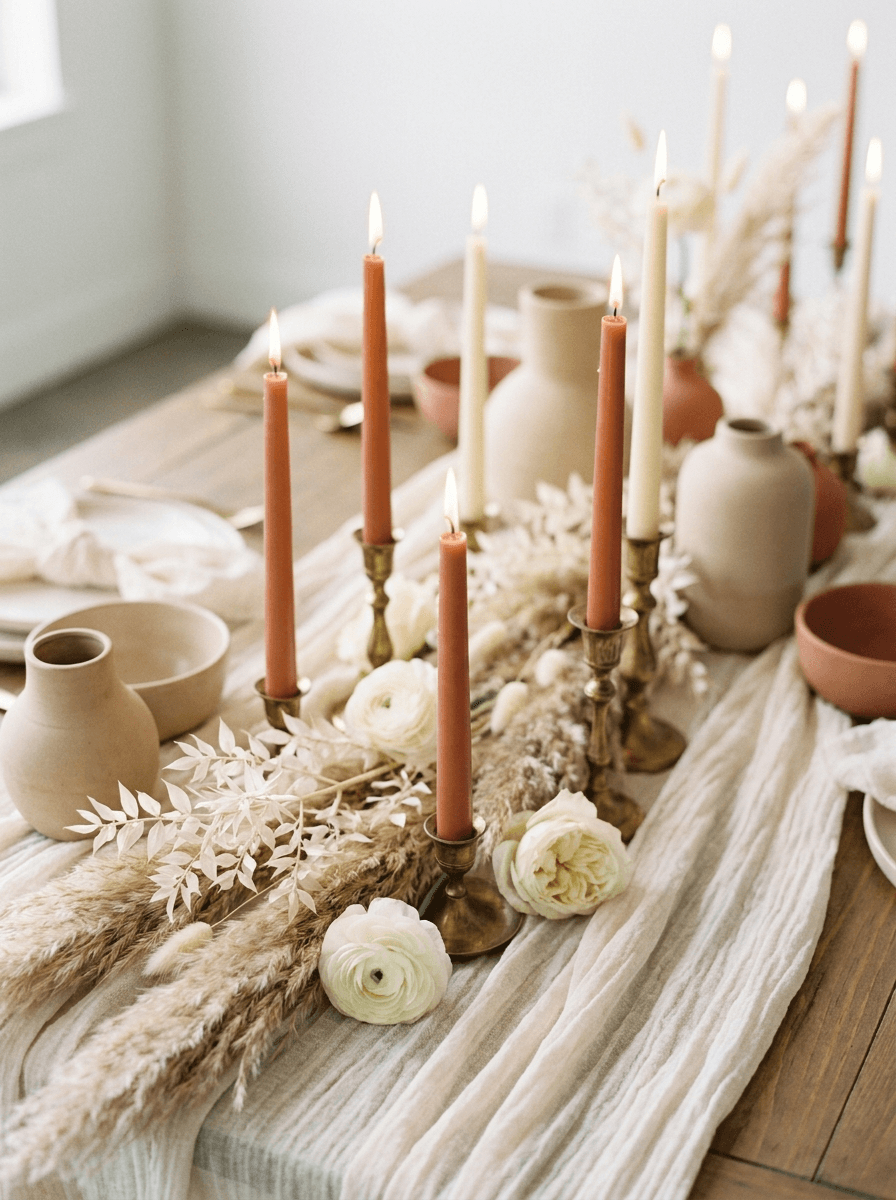
Instead of gold accents and crystal chandeliers, muted elegance dominates: olive, beige, warm white, seasonal flowers and natural fabrics. Venues with gardens, greenhouses and "outdoor with cover" book a year ahead — one of the strongest visual trends of the season.
- Palette: sand, olive, butter yellow, muted pastels.
- Décor: more greenery, less plastic and disposable ornaments.
- Invitation and place card style consistent with everything — one guiding theme.
How to translate this to table and décor? Here are two ready-made sets in the 2026 spirit — tablecloth, napkins, candles and flowers in these shades and the whole look clicks:
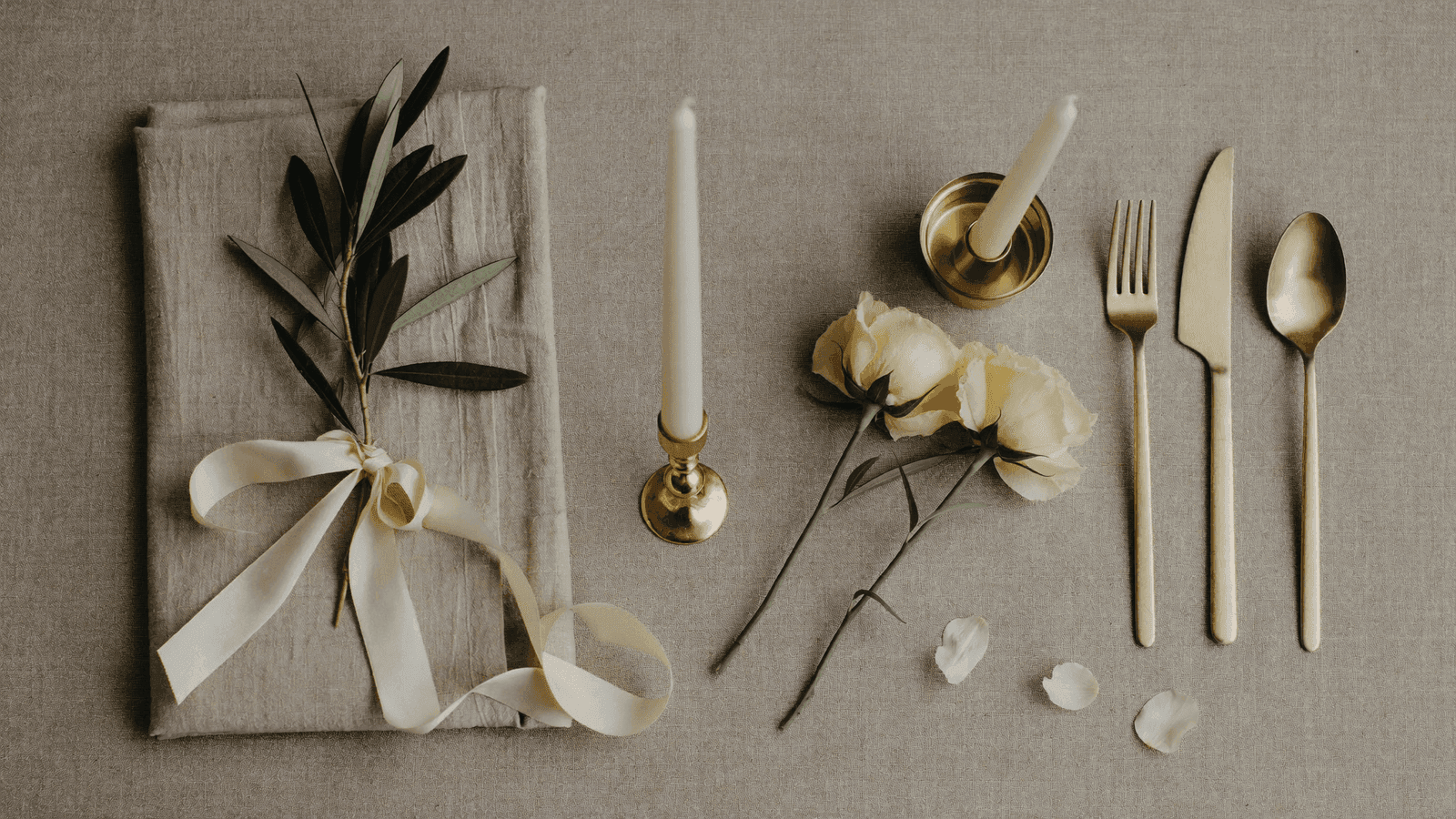
Sand, olive and butter yellow — natural fabrics, linen napkins, brass candle holders.
- Linen tablecloth and napkins in sand
- Olive branches along the table
- Bouquets: yellow roses and wildflowers
- Taper candles in warm white
- Brass candle holders and cutlery
- Place cards on olive branches
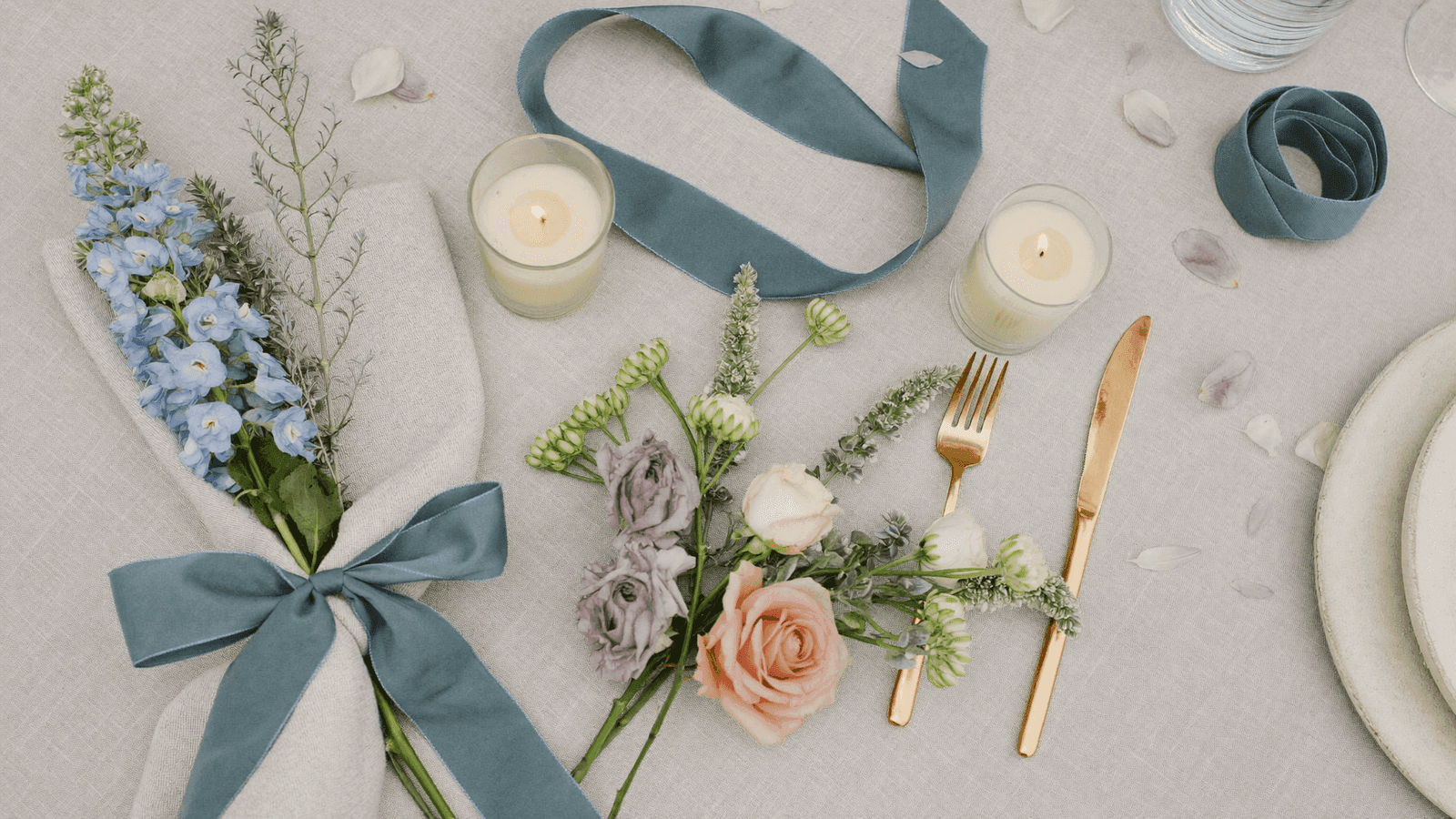
Soft, dusty tones — great for place cards, bouquets and sweetheart table décor.
- Tablecloth and napkins in ecru
- Bouquet: delphinium and lilac in powder blue
- Place cards and silk ribbons in heather
- Greenery: eucalyptus and sage
- Candles and glassware in pastel tones
- Heather accents on cake and stationery
Micro wedding — quality over scale
A wedding for 20–50 guests is no longer "plan B". It's a conscious choice by couples who prefer deeper connections and investment in details over plates for a hundred. A smaller guest list also means easier seating, faster RSVP and less budget stress.
Food station instead of photo booth
Classic attractions give way to interactive food stations: mobile pizza oven, sushi bar, cocktail corner, live ice cream. Guests film the moment, eat something fresh and return to conversation — hence their popularity on Instagram and TikTok. Such an attraction usually costs 2,500–6,000 PLN, but replaces several smaller "gadgets" nobody remembers.
Technology in the background — not on display
Couples increasingly use digital RSVP, shared task lists and seating plans instead of five Excel sheets. AI in wedding planning doesn't replace decisions — it speeds them up: suggests next steps, proposes seating by rules and tracks deadlines. A trend "invisible" in photos, but felt in the final months before the wedding.
- Website or RSVP form with diets and playlist — instead of 40 Messenger messages.
- Wedding Board instead of scattered notes — the couple sees the same thing in one place.
- Seating plan with rules (who with whom, who apart) — finalise 2–3 weeks before the wedding.
What to implement first?
Start with decisions that affect everything else: guest count, date and budget. Visual trends can be adjusted later. If you dream of an intimate reception — don't book a room for 150 "just in case". If you want a food station — add it to the budget upfront, not in the last month.
Try Wedding Board
Import guests from Excel, table seating, live budget. First month at PLN 0.
Start planning30 days at PLN 0 · Cancel whenever
Darmowy pakiet
Wesele bez chaosu
Ebook + arkusz kalkulacyjny z czterema arkuszami: harmonogram, budżet, lista gości i plan stołów. Pobierz za 0 zł.